
Video System Design That Changes the Room

Video System Design That Changes the Room
Some screens display content. The best video systems become part of the place. They turn ceilings into performances, architecture into moving canvases and outdoor stages into visual landmarks. People don’t see a collection of panels. They see the moment.
Get it wrong and size won’t save it. Pictures wash out, sightlines disappear and three specialists are needed to put a logo on screen. Impressive technology can still create a forgettable experience.
We start with what people need to see, where from and what the picture must do to the room. Then we engineer the system around that purpose. It’s the thinking behind Pacha’s kinetic sculpture, 77 London’s curved LED centrepiece and Wet Republic’s wall in the Las Vegas sun.
Experience first. Every light earns its place.
Video system design turns an experience, communication or performance brief into a buildable system. It covers display technology, position, resolution, brightness, processing, playback, distribution, control, structure, power and how video works with audio and lighting.
It follows the same principle as our experiential design: experience first, technology with purpose. Before we choose LED, projection or a conventional display, we ask:
- Who needs to see the content – and from where?
- What should the visual system make people notice, feel or do?
- What will daylight, distance, architecture and camera use do to the picture?
- Who’ll load, route and control the content when the venue is busy?
Only then do we choose the canvas. Buying pixels first is an expensive way to discover the content doesn’t fit.
What changes when video is properly designed
The picture belongs to the architecture
A display shouldn’t look like a television added after the room was finished. Shape, scale and position let video sit within the architecture without blocking the view.
People can see it in the real conditions
Brightness is only part of visibility. Distance, angle, light and reflections matter. We design for the front row, far terrace and camera – not the easiest seat in the visualisation.
The content gets the right canvas
Aspect ratio, resolution, pixel pitch and processing shape the content. We define them early so the creative idea isn’t squeezed into the wrong surface.
Operation and maintenance stop being afterthoughts
Inputs, presets, monitoring and access suit the venue team. Content can change and faults can be found without dismantling the room or ringing the programmer at midnight.
LED, projection, displays and kinetic video
Direct-view LED
LED gives us freedom over scale, brightness and shape. The design must still balance pixel pitch, heat, weight, access, power and cost. More resolution isn’t automatically more sense.
Projection and projection mapping
Projection can turn unusual surfaces into part of the story. We assess throw distance, lenses, light, shadows and alignment. A projector is only invisible until somebody walks through the beam.
Digital displays and signage
Display networks support wayfinding, brand content, live feeds and information. The value comes from putting the right format where people look and making distribution simple across one screen or an estate.
Kinetic and sculptural video
When video moves, engineering becomes part of the idea. Structure, motors, cables, safety, pixel mapping and show control must behave as one. Movement should create surprise, not anxiety above the dancefloor.
Audiotek gives UK clients a direct route to Taylorleds’ indoor, outdoor, fixed, flexible and live-event LED systems, backed by people who understand what happens when those panels meet a real venue. We don’t separate the product conversation from viewing distance, brightness, content, structure, access, control and installation. They’re all part of the same decision.
The exclusive relationship doesn’t replace design judgement. It gives us deeper product knowledge and a closer route to specification, supply and support. We’ll match the panel and processing to the job, explain the trade-offs clearly and design the surrounding system so the screen performs as intended. A box arriving at the loading bay isn’t the same thing as a working video system.
Design the canvas before installing the screen
Define the audience, content and operating modes
We establish what will be shown, who needs to see it and who controls it. A live show and a wayfinding network make very different demands.
Read the room and test the sightlines
Plans, surveys and visualisation reveal angles, daylight and constraints. We test scale, position and image density before a screen blocks the feature it should improve.
Engineer the complete system
We develop the display, structure, distribution, processing, playback, control, power, data and service access. Through AV integration, we coordinate it with audio, lighting, show control and the building. The pixels are visible. Most of the work sits behind them
Configure, calibrate and hand it over
During installation and commissioning, we test signals, calibrate the image, configure presets and train the team. One dead module attracts every eye, so we plan access and support before it gets the chance.
The same service. A very different job in every sector
Nightlife and live entertainment
Video becomes part of the performance. It must support changing shows, preserve sightlines and create an identity people recognise instantly – in the room and on somebody else’s phone.
Hospitality, resorts and dayclubs
Displays may shift from subtle content to full entertainment mode. Outdoors, brightness, heat, water and dust change the job completely. An indoor specification won’t survive by the pool through positive thinking.
Retail, casinos and visitor attractions
Video can guide, explain and entertain. Long operating hours and varied content make reliability, colour consistency and maintenance as important as first-day impact.
Theatres, performance and sporting venues
Relay screens, scenic video, scoreboards and live feeds must remain clear across difficult sightlines. Timing and signal reliability are critical. A delayed picture has no dramatic timing.
Video system design in practice
Pacha Ibiza

Pacha wanted a centrepiece that could change with the night. Audiotek created 37 custom hexagonal Taylorleds panels, mapped as one canvas and suspended on controlled motors. The rig shifts from canopy to DJ backdrop to moving sculpture, with video, light and motion working as one show.
77 London
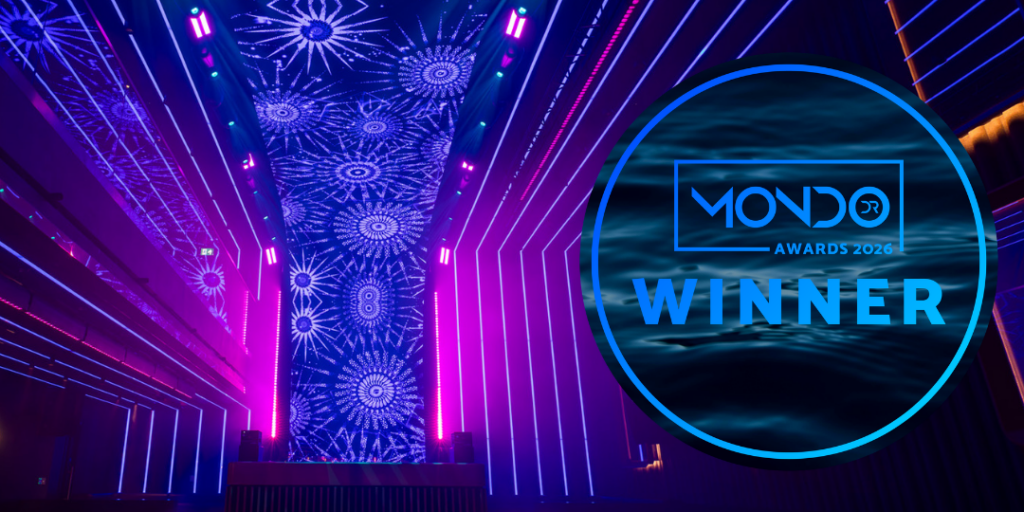
A tight, asymmetrical basement demanded precision. Audiotek designed a curved, ceiling-hung LED centrepiece and coordinated its frame, sightlines, playback and control with the lighting, audio and structure. Big impact; no spare millimetres and no room for a casual guess.
Wet Republic, Las Vegas

Wet Republic needed an outdoor wall visible in direct Las Vegas daylight and built for heat, water and a relentless calendar. Audiotek designed and installed a high-brightness Taylorleds display with the processing, structure and service strategy required by the real environment.
The screen isn't the finish line
A video system can look perfect in a demo and fail when the sun comes out or the content changes. Audiotek has spent more than 40 years turning ambitious AV ideas into systems that can be built, operated, maintained and trusted after launch.
We can provide video design as a defined service or carry it through integration, installation, commissioning and support. The scope follows the project. The picture still has to work when the room is full.
Video design insights
Good video design goes well beyond screen size. These Audiotek insights explore kinetic installations, daylight-readable video walls and the way visual technology is changing entertainment spaces.
Read Designing Dynamic Video Installations for Nightclubs
Read How to Design Day Club Video Walls for Maximum Impact
Read Why Modern Clubs Are Becoming Immersive Performance Spaces
Read The Complete Guide to Immersive Entertainment Venue Design
Tell us what the picture needs to do
Bring us the plans, the content idea, the screen that disappears in daylight or the ambitious concept that hasn’t met the engineering yet. We’ll work out who needs to see what, where they’ll see it from and the video system that makes the picture belong in the space.
Video system design FAQs
What is included in video system design?
The scope can include the brief, site review, display selection, sightline and brightness studies, pixel-pitch planning, structure, processing, playback, distribution, control, power, data and coordination. Deliverables follow the project stage and route.
What's the difference between an LED wall and an LCD video wall?
A direct-view LED wall uses modular panels to create bright or shaped canvases without bezels. An LCD video wall combines flat-panel screens, so seams remain. LCD can suit smaller indoor uses; LED often suits scale, brightness and shape.
How do you choose the right pixel pitch?
Pixel pitch is the distance between LED pixels. A finer pitch supports closer viewing, but changes cost, processing and power. We choose it around distance, content, cameras and canvas size – not because the smallest number looks best in a tender.
Is Audiotek the UK distributor for Taylorleds?
Yes. Audiotek is the exclusive UK distributor for Taylorleds. We support selection, specification, supply, design, integration, installation and commissioning. The new Taylorleds Hub will provide a dedicated route into the ranges and applications.
Does Audiotek create video content?
We define the canvas, playback and technical content requirements with clients and creative teams. If production is included, we’ll agree that scope at the start. System and content must be designed for each other.
Can Audiotek provide video design without installation?
Yes. We can provide a defined design for a client or local team, or carry the work through integration, installation and commissioning. Audiotek works internationally; Taylorleds distribution is exclusive within the UK.