
Lighting System Design That Changes How a Space Feels

Lighting System Design That Changes How a Space Feels
People notice bad lighting immediately. They squint, lose focus or wonder why an expensive room feels strangely flat. Good lighting does the opposite. It builds anticipation, directs attention and gives a venue its rhythm – often without anyone asking how.
That doesn’t come from scattering fashionable fixtures across a ceiling plan. We start with the people, the place and the moments the venue needs to create. What should guests notice first? When should the room hold back, and when should it come alive?
Then we engineer the lighting, control and infrastructure to make it happen. The glamorous render is only the beginning. The design also has to survive the structure, power, sightlines, access and the person running it on a busy night.
Experience first. Every light earns its place.
Lighting system design turns an experience, architectural or performance brief into a buildable system. It covers fixtures, positions, optics, output, colour, power, data, rigging, control, programming and how the lighting works with the rest of the venue.
It follows the same principle as our experiential design: experience first, technology with purpose. Before we specify a fixture, we ask:
- What should people feel, see and do in the space?
- Which features, performers or moments need focus?
- How many different moods and operating modes must the venue support?
- Who’ll control it when the room is full and time is short?
Only then do we choose the tools. A fixture schedule isn’t a lighting concept. It’s a shopping list with channel numbers.

What changes when the lighting is properly designed?
The room gains an identity.
Light can make architecture feel dramatic, intimate, calm or charged. We use colour, contrast, movement and shadow to give the venue a recognisable character, not decorate whatever everyone else has finished.
Attention goes where it should.
Good lighting guides the eye. It can reveal an entrance, frame a performer or draw people through a gallery. Brightness alone doesn’t create focus. Contrast and timing do much of the work.
One space can change gear.
A venue may move from daytime operation to dinner, a private event or a full show. Scenes, zones and cues let the lighting change with it, without asking the team to programme a small moon landing every evening.
Control stays usable under pressure.
Complex behind the scenes doesn’t have to mean complicated at the controls. We design presets and interfaces around the venue team, while retaining the deeper access a lighting operator needs.
Architectural lighting, entertainment lighting and control.
Architectural and atmospheric lighting.
Ambient, accent and feature lighting reveals materials, supports wayfinding and shapes mood across entrances, bars, lounges and public spaces. It should feel part of the architecture, not a technical layer added afterwards.
Entertainment and performance lighting.
Moving lights, washes, beams, strobes and effects create focus and energy. The design must protect sightlines and give visiting teams enough flexibility without turning every event into a technical rebuild.
Lighting control and show integration.
Scenes, cues, time-based events and operator control bring the design to life. Through AV integration, lighting can work with audio, video, content and kinetic elements. Synchronisation should serve the moment, not make the technology perform a party trick nobody asked for.
Design it before the ceiling closes.
Define the experience and operating modes.
We establish the audience, brand and practical use of the space, then map the important moments, dayparts and control responsibilities. ‘Make it impressive’ is an ambition. The brief needs to say what impressive should do.
Read the room.
Plans, surveys and visualisation reveal viewing angles, ceiling heights, finishes, daylight and where equipment can live. We test focus, beam paths, colour, contrast and movement before fixtures are committed.
Engineer the complete system.
We develop the layout, fixture specification, control architecture, power, data, rigging and access requirements. We coordinate with interiors, structures, electrical services, fire systems and the rest of the AV design. Ceilings get crowded quickly. Good drawings prevent expensive arguments later.
Programme, commission and hand it over.
During installation and commissioning we focus fixtures, check colour and output, test control paths, programme useful scenes and refine the look in the real room. Then we train the team. A beautiful show file isn’t much use if only its author knows where the buttons are.
The same service. A very different job in every sector
Nightlife and live entertainment.
Lighting becomes part of the performance. The system needs energy and flexibility for different artists, while protecting sightlines and giving the room an identity people recognise in person and on a screen.
Hospitality and destination venues.
Here, lighting shapes the guest journey and the move from day to night. Warmth, intimacy, zoning and simple scene control matter more than constant spectacle. The best result feels effortless.
Theatres and performance spaces.
Production flexibility, accurate control and repeatable cues are essential. The system must support in-house and visiting teams, work with existing infrastructure and cope with a programme that may change several times a week.
Retail, culture and visitor attractions.
Lighting can reveal products, protect exhibits, guide movement and support storytelling. Colour quality, glare, focus and integration with interactive or video content must suit the experience, not another kind of venue.
Lighting system design in practice.
Omnia, Las Vegas
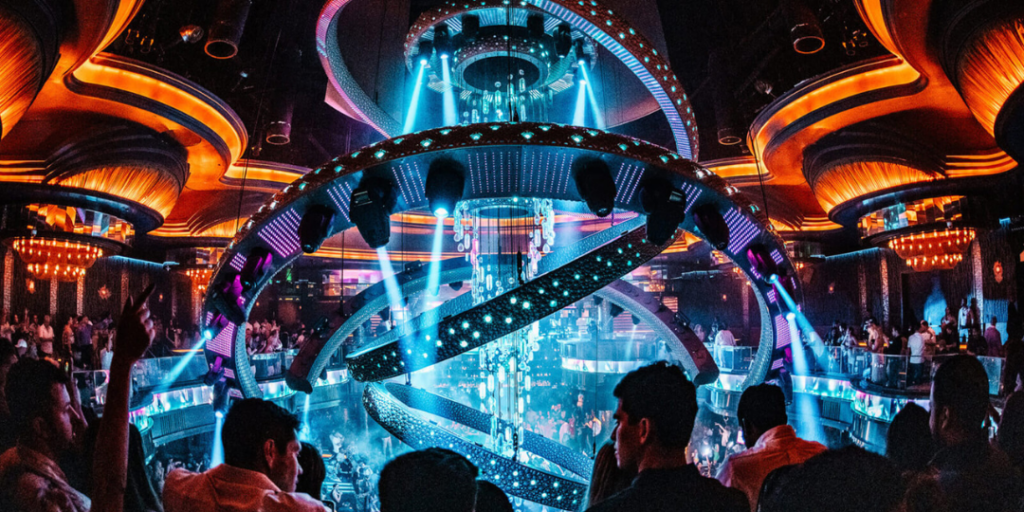
Omnia’s 32-foot kinetic chandelier had to become part of the show, not simply hang above it. Audiotek integrated motorised movement, Robe fixtures, video and control so the centrepiece could descend, spin and change with the room’s energy.
Hakkasan, Las Vegas

Across five floors, Audiotek created a custom truss based on the Hakkasan identity and integrated moving lights with a continuous LED environment. Performers get flexibility; the venue remains visually unmistakable.
Jewel, Las Vegas

At Jewel, dual-sided lighting and video fixtures, motorised brackets and LED wraps turn the DJ backdrop into a moving visual system. Pre-visualisation and live programming made it feel spontaneous without leaving anything important to chance.
77 London
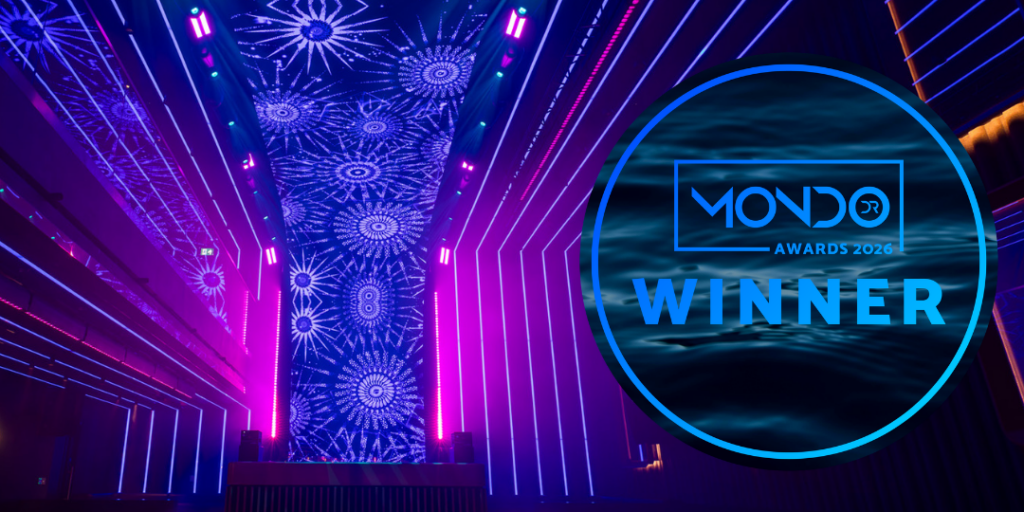
The room’s asymmetry demanded a precise answer: a winched lighting bar that drops into alignment during the show. Audiotek coordinated it with a curved LED centrepiece, audio and control in a basement where every millimetre mattered.
Will it work with the architecture?
A lighting idea can look flawless in a visualisation and still come unstuck when it meets steelwork, sprinklers and six other trades in the ceiling. Audiotek has spent more than 40 years turning ambitious ideas into systems that can be installed, operated and maintained.
We can provide lighting design as a defined service or carry it through integration, installation, commissioning and support. The scope follows the project. The purpose of every light stays clear.
Lighting design insights.
Good lighting design goes well beyond brightness. These Audiotek insights explore how light works with architecture, sound, visuals, audience behaviour and different venue types.
Read How Lighting and Audio Design Transform Art Galleries
Read Why Modern Clubs Are Becoming Immersive Performance Spaces
Read The Complete Guide to Immersive Entertainment Venue Design
Tell us what the room needs to become.
Bring us the plans, the existing rig, the creative brief or the room that’s never quite worked. We’ll look at what people should notice, how the atmosphere needs to change and the lighting system that can deliver it – night after night, not just for the launch photographs.
Lighting system design FAQs
What is included in lighting system design?
The scope can include the brief, site and drawing review, concepts, visualisation, fixture layouts, beam studies, specifications, power and data requirements, control design, rigging details, schematics and schedules. We agree the deliverables around the project stage and delivery route.
What's the difference between architectural and entertainment lighting?
Architectural lighting supports the building and everyday use. Entertainment lighting supports shows and dynamic effects. Many venues need both, linked through control that doesn’t ask restaurant staff to operate a touring console at lunch.
When should Audiotek join the project?
As early as possible. Early involvement lets us coordinate positions, structure, power, data, access and control before the interiors are fixed. We can join later, but solving a missing cable route after the plasterboard arrives is rarely anybody’s favourite use of the budget.
Can Audiotek upgrade an existing lighting system?
Yes. We’ll assess the fixtures, controls, infrastructure and operational problems before deciding what stays. The answer may be new programming, targeted replacement, a control upgrade or a phased redesign. Reusing the right equipment is sensible. Preserving an awkward system because it still switches on isn’t.
Can Audiotek provide lighting design without installation?
Yes. We can provide a defined design and specification for a client, consultant or local team. We can also take responsibility for integration, installation and commissioning. Audiotek works internationally with architects, designers, contractors and venue teams.