
Experiential AV Design: for Venues People Remember.

Experience matters. It's what guests takeaway, it's what drives success.
The best venues do more than look and sound impressive. They change how people feel. They build anticipation, hold attention and create moments people want to experience again.
That doesn’t happen by filling a room with impressive technology and hoping it all gets along. We start with the people, the place and what needs to happen there. What should someone feel when they arrive? Where should their attention go? How should the energy change—and what should stay with them after they leave?
Experience first. Technology with purpose.
That’s more than a good strapline. It’s a philosophy. It changes the order of our work. Before we talk hardware, we ask:
- Who uses the space?
- How do they move through it?
- Where does their attention need to fall?
- How should the atmosphere shift from one zone to the next?
The technology comes next, with a job to do. Sound can create scale, intimacy or energy. Lighting can change pace and pull focus. Video can carry a story beyond the edge of a screen. Control ties those moments together, so the venue responds as one environment rather than several clever systems having separate conversations.
Experiential AV design isn’t about making everything louder, brighter or more obviously ‘immersive’. Sometimes the result is spectacular. Sometimes it’s felt more than seen. What matters is that every technical decision supports the experience instead of competing with it.
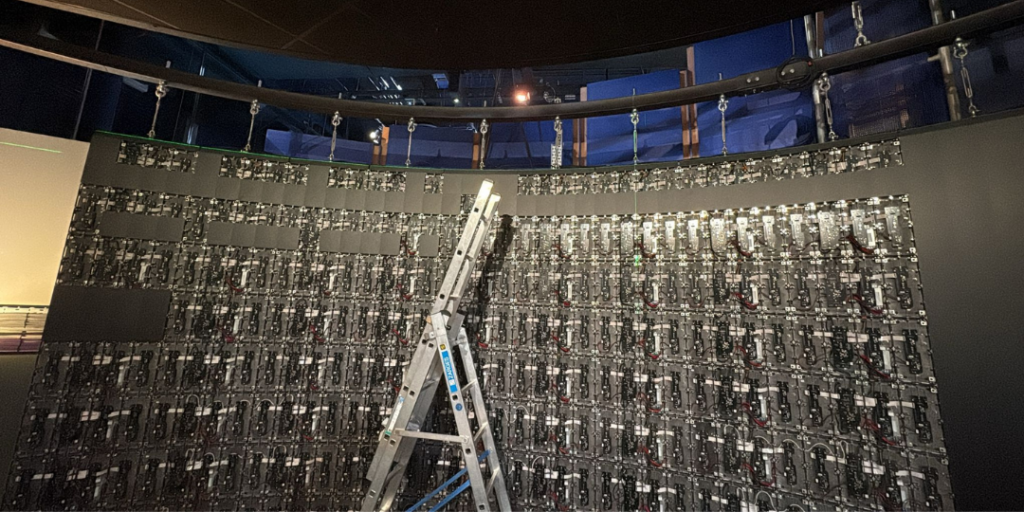
What changes when the experience leads the design?
The venue feels like itself.
AV should strengthen the identity of a place, not sit on top of it. We use sound, light, moving image and interaction to support the story, brand and emotional character of the venue. The technology belongs in the room because it has grown from the same idea.
People know where to look - and where to go
Coordinated cues can draw attention, build anticipation, guide movement and encourage exploration. In a nightclub, that may mean controlling the energy of the room. In a museum, it might turn information into a moment people can feel and remember rather than another panel they politely walk past.
One space can do more than one job.
Zoning, presets, show control and flexible content let a venue change with the audience, event or time of day. The experience can move from calm to high-energy, or from everyday operation to a major performance, without the team rebuilding the system every time.
The team can actually use it.
Sophisticated technology shouldn’t create a daily obstacle course. We plan the operating modes, permissions, interfaces and presets around real users. If it takes the duty manager three manuals and a phone call to change the room, it isn’t properly designed.
Problems are solved while they're still drawings.
Audio, lighting, video, structures, power, networks, finishes and content all affect one another. Bringing them together early exposes conflicts before they become expensive site changes. It also protects the original idea from being quietly diluted between the concept image and the cable schedule.
Turning an idea into something that can be built.
A good idea still has to survive the building, the budget and a busy Friday night. Our experiential design process gives the creative ambition enough technical detail to make that happen.
Understand the people and the place
We get to grips with the audience, venue, brand, programme, architecture, commercial priorities and operational realities. We also identify what’s fixed, what’s flexible and which assumptions need testing before they harden into the brief.
Map the journey and the moments
Together, we define how people arrive, move and engage; where the experience needs to change; and which moments should carry the most emotional or visual weight. We also map the venue’s different states, from everyday operation to special events and full show mode.
Build the creative and technical concept
We translate the experience into a coordinated concept for sound, lighting, video, content delivery, interaction and control. This is where the ambition gains system logic, spatial requirements and a route towards costing and delivery.
Test it against reality
Modelling, sightline studies, acoustic analysis, mock-ups, structural checks and technical reviews tell us whether the concept will work before site becomes the testing ground. Some ideas need refining. That’s the process doing its job, not creativity losing an argument.
Give the whole team a connected brief
The output has to be useful to architects, interior designers, content teams, engineers, contractors and operators. We define responsibilities, interfaces and performance requirements clearly, so everyone is building towards the same experience.
Some clients need Audiotek for experience definition and concept development. Others ask us to carry the thinking through detailed design, integration, installation and commissioning. We’ll agree the scope around the project rather than forcing the project into a package.

One brief. Several technical disciplines.
Experiential design connects Audiotek’s specialist services; it doesn’t duplicate them. It gives each discipline a shared purpose before the detailed engineering begins.
The experience brief can then inform audio system design, lighting system design, video system design and AV integration from the start. The result is one joined-up environment, not a stack of separate specifications that only meet for the first time on site.
Experiential design in practice.
National Space Centre
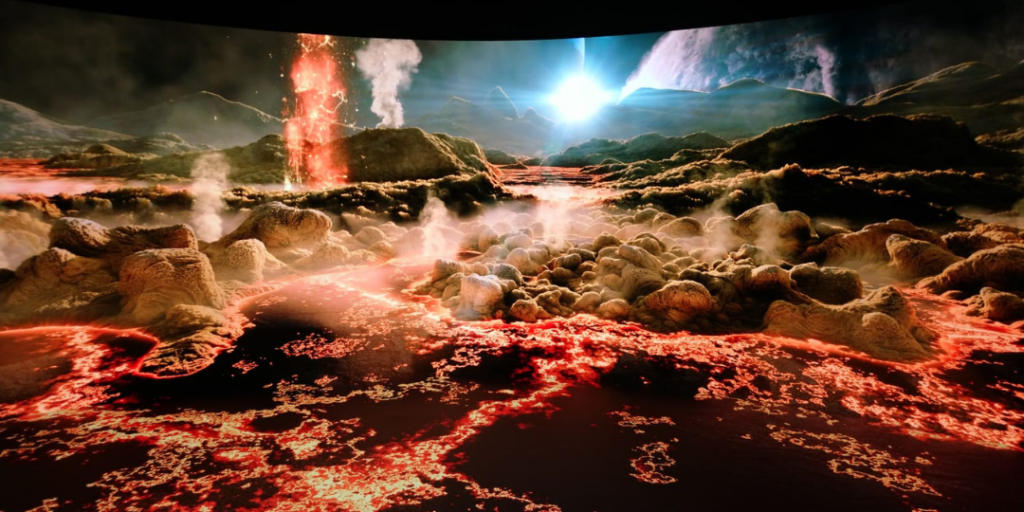
NSC Creative developed the story for the Outer Solar System gallery. Audiotek engineered the environment through which visitors experience it: curved LED displays, an LED floor, immersive audio, specialist fabrication and integrated control. The technology surrounds the visitor, but the story remains firmly in charge.
77 London
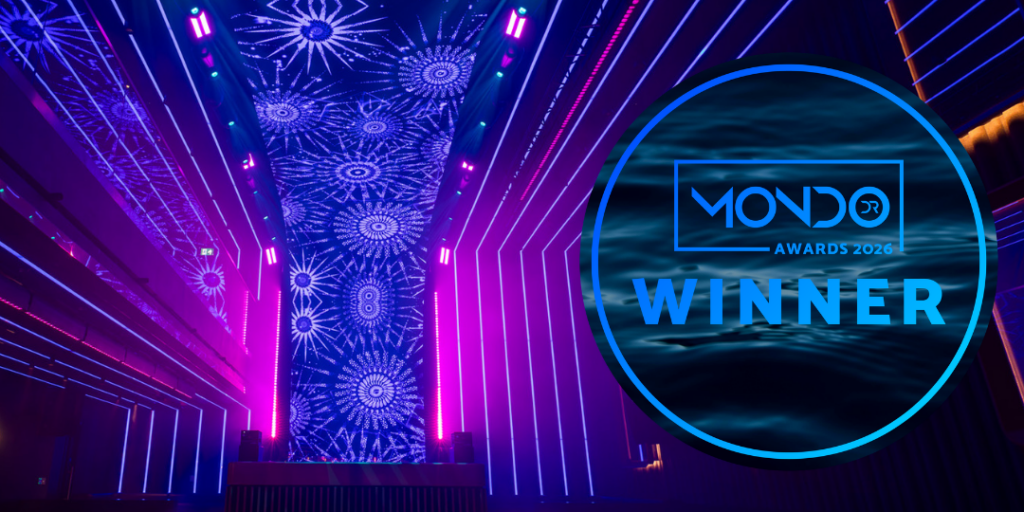
Inside a compact, asymmetrical basement beneath an operating luxury hotel, every millimetre mattered. Audiotek combined immersive audio, a suspended curved LED centrepiece weighing more than 2.5 tonnes, adaptable lighting and unified control. Detailed modelling and structural coordination turned a difficult room into a venue with its own unmistakable identity.
Omnia, Las Vegas
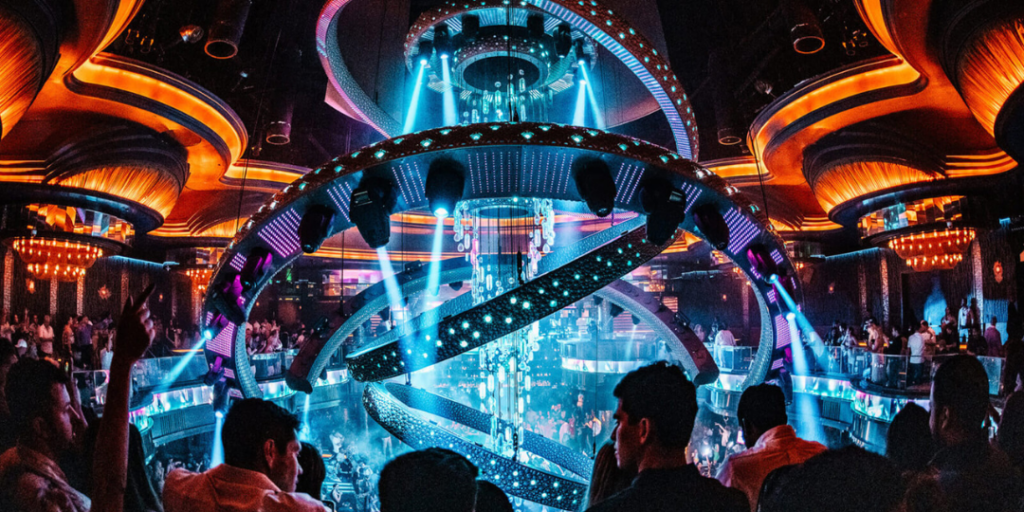
Omnia had three distinct environments and one very clear ambition: to become part of the show. Audiotek designed and delivered the connected audio, lighting, video, movement and control behind the venue, including its 32-foot kinetic centrepiece. Every zone works differently, but the experience never feels fragmented.
The idea must coexist with the building.
A concept can look brilliant in a render and unravel when structure, power, acoustics, sightlines, access, content and daily operation enter the room. Audiotek has spent more than 40 years working in the gap between creative ambition and technical reality.
Our designers, engineers, project managers and installation teams understand how decisions made early affect everything that follows. That helps us spot problems while they’re still lines on a drawing, protect the parts of the idea that matter and give ambitious projects a practical route to opening day.
We’ve delivered high-pressure entertainment venues, cultural buildings, hospitality destinations and public environments around the world. The technology changes. The need to balance audience experience, engineering performance and the people running the venue doesn’t.
Experiential design insights.
The best experiential projects usually begin with a better question than ‘Which screen should we buy?’ These guides look at how audience behaviour, atmosphere, storytelling and technical design come together in real venues.
Read The Complete Guide to Immersive Entertainment Venue Design
Read Why Modern Clubs Are Becoming Immersive Performance Spaces
Tell us what people should feel, do and remember in your venue.
You don’t need to arrive with an equipment list. Bring us the ambition, the problem, the building or the half-formed idea. We’ll help turn it into an experience brief and a technical route that the whole team can work with.