Why Racecourse Sound Systems Fail (And How to Get Them Right)
Racecourses and racecourse sound systems look straightforward from an audio perspective; wide open spaces, large crowds, and plenty of room for loudspeakers. In reality, they are one of the most challenging environments to deliver consistent, intelligible sound.
Unlike indoor venues, where sound can be contained and managed more easily, racecourses demand a far more controlled and deliberate approach. Distances are greater, audiences are constantly moving, and background noise can change dramatically throughout the day.
This is where many systems fall short.
Racecourse sound systems Key Summary
Sound systems at racecourses struggle because audio has to cover large distances, compete with high background noise, and remain consistent across multiple listening areas.
Achieving clear, intelligible sound requires more than volume. It depends on controlled loudspeaker coverage, distributed system design, and precise timing between sources to ensure announcements are understood across the entire venue.
Racecourse sound systems Key Takeaways
- Racecourses require distributed audio systems, not centralised ones
- Intelligibility matters more than volume
- Poor timing between speakers causes echo and confusion
- Line arrays help control sound over long distances
- Systems must be designed for race day conditions, not empty venues
Why Racecourses Are Acoustically Challenging
Racecourses combine several factors that make sound system design particularly complex:
- Audiences are spread over large distances, often hundreds of metres
- Multiple listening zones, including grandstands, railside viewing, hospitality areas, and betting enclosures
- High and unpredictable background noise from crowds and activity
- Constant movement of people throughout the venue
- Environmental factors such as wind and weather
This isn’t a single listening environment—it’s a collection of different spaces that all need to receive clear, consistent sound.
Why Intelligibility Matters More Than Volume in Racecourse Sound Systems
At racecourses, the objective isn’t simply to make sound louder. It’s to ensure announcements can be understood clearly, wherever people are located.
That means focusing on:
- Consistent coverage across the site
- Maintaining a strong signal relative to background noise
- Ensuring sound arrives at the right time from all sources
Without these elements working together, even a powerful system can struggle to deliver usable sound.
What Causes Racecourse Sound Systems to Fail?
If the system isn’t designed with the real world in mind, the problems are usually very noticeable:
- Areas close to speakers are too loud, while distant areas lack clarity
- Speech becomes difficult to follow, especially during busy periods
- Audible delays between different speaker zones
- Inconsistent sound quality across the venue
These issues aren’t typically caused by a lack of equipment. They’re the result of poor control over how sound is distributed and delivered.
How Good Racecourse Sound Is Achieved
Designing effective outdoor sound systems is about control, not brute force. The following approaches are key to delivering consistent results.
Controlling Coverage with Line Arrays
Line array loudspeakers are commonly used in large venues because they allow engineers to control how sound is projected across distance, maintaining more consistent coverage from front to back.
They help to:
- Maintain more consistent sound levels over distance
- Focus energy where it’s needed
- Reduce sound being wasted into areas like the sky or unused spaces
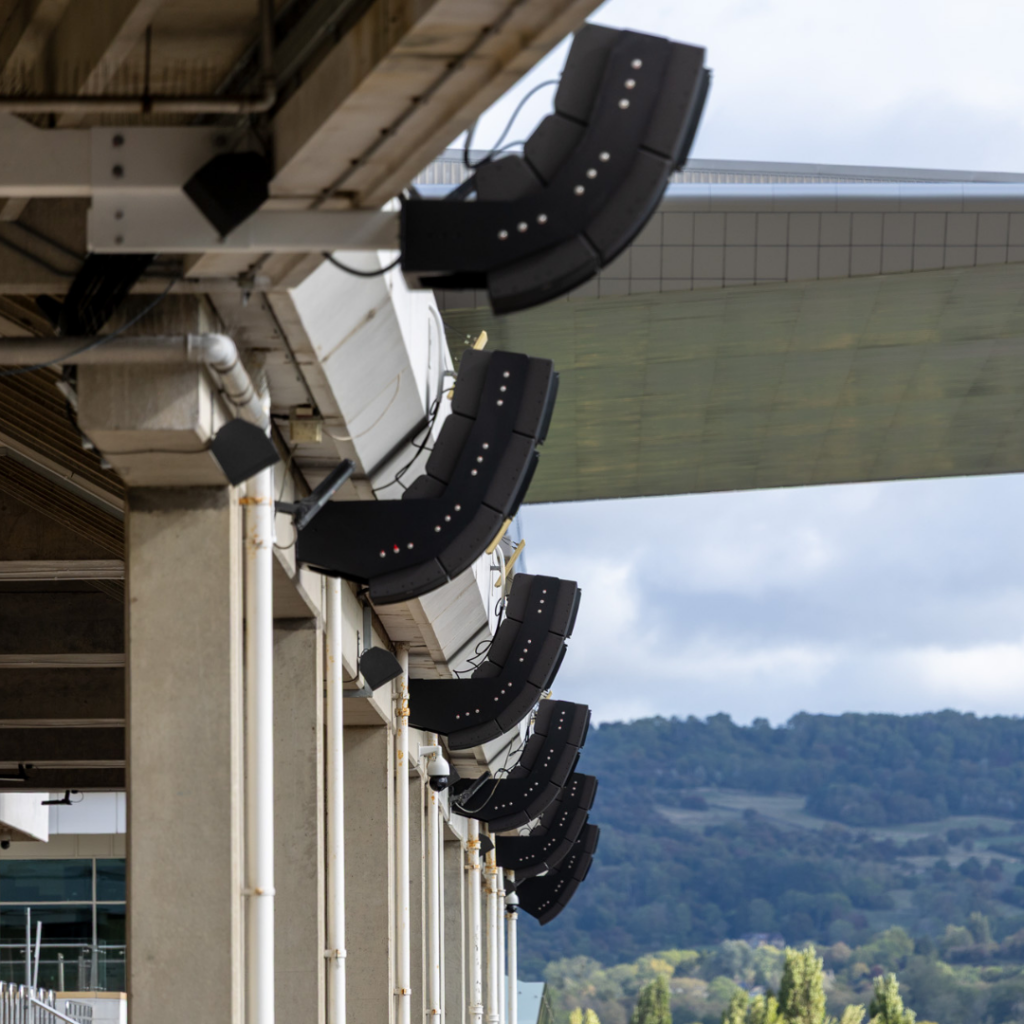
This level of control is essential in environments where distances are significant and consistency matters.
Bringing Sound Closer with Distributed Systems
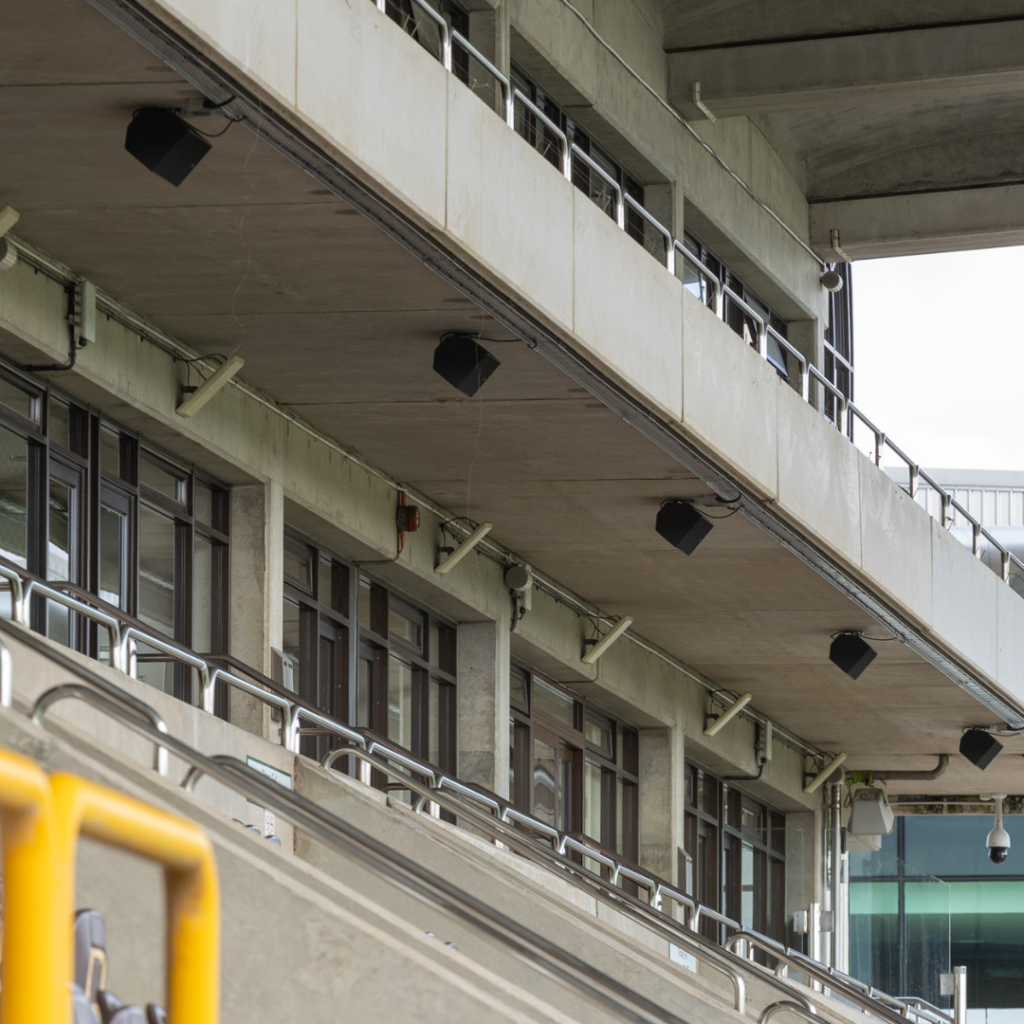
Rather than relying on a small number of powerful speakers, racecourses benefit from distributed systems.
This involves placing multiple loudspeakers throughout the venue so that sound doesn’t have to travel as far.
The result is:
- Improved intelligibility
- More even coverage across all areas
- Reduced need for excessive volume
Timing and Alignment Across the Site
In large venues, sound often comes from multiple sources. If these are not properly aligned, listeners may hear the same sound at slightly different times.
This can lead to echo-like effects and reduced intelligibility.
By carefully aligning timing between loudspeakers, systems can ensure that sound arrives coherently across different zones, maintaining clarity and consistency.
Designing for Race Day Conditions
It’s easy to judge a system based on how it performs during installation. Race day is a different story.
On race day:
- Crowd noise increases significantly
- The acoustic environment changes
- Usage patterns become more demanding
Effective systems are designed with these real-world conditions in mind, ensuring they continue to perform when it matters most.
Why This Matters
Clear, intelligible sound is critical in racecourse environments.
It supports:
- A better experience for attendees
- Efficient communication across large areas
- Effective delivery of important announcements
In venues where large numbers of people rely on timely information, sound systems aren’t just part of the experience; they’re part of how the venue operates.
Compliance
Racecourses, like any sports ground, must comply with a number of regulations. These can include governing body requirements such as BHA regulations in horseracing, FIFA, and UEFA standards in football, as well as local and national standards.
In the UK, this may include BS7927, BS5839 and EN54 depending on the system’s purpose and scope.
It’s important for designers to understand the relevant regulations, highlight them clearly, and ensure systems are designed to meet both operational and compliance requirements.
Frequently Asked Questions
Why are racecourse sound systems so difficult to design?
Because they must cover large distances, manage multiple listening zones, and compete with constantly changing background noise while maintaining clarity.
What is the most important factor in racecourse audio?
Intelligibility. Announcements must be clearly understood across the entire venue, not just heard.
How do you improve sound at a racecourse?
By using distributed loudspeaker systems, line arrays for controlled coverage, and precise timing alignment between speakers.
Closing Thoughts
Getting sound right at a racecourse isn’t about adding more speakers or increasing volume. It’s about control; knowing where sound needs to go, how it behaves across distance, and how different parts of the system interact.
When systems are properly designed, the difference is immediate. Announcements are clear, coverage is consistent, and the entire venue feels connected rather than fragmented.
And in environments where communication matters (not just for experience, but for day-to-day operations) getting that right isn’t optional. It’s fundamental.

Chris Kmiec
A self confessed AV nerd, Chris is a graduate of Surrey University and has over 15 years experience with commercial AV design for venues of all types in every corner of the world.