
L-Acoustics L1 Review: First Impressions from the 2026 Keynote
L-Acoustics L1 Review: Following on from our successful opening at OMNIA Dayclub in Las Vegas, I had the opportunity to attend the L-Acoustics Keynote 2026. The Keynote takes place once a year, at a different venue, and is where L-Acoustics launch new products each year. I’ve previously attended when it’s been in London.
However, this year – was different. The launch of “The One.”
What is the L1? L-Acoustics L1 Review and first impressions:
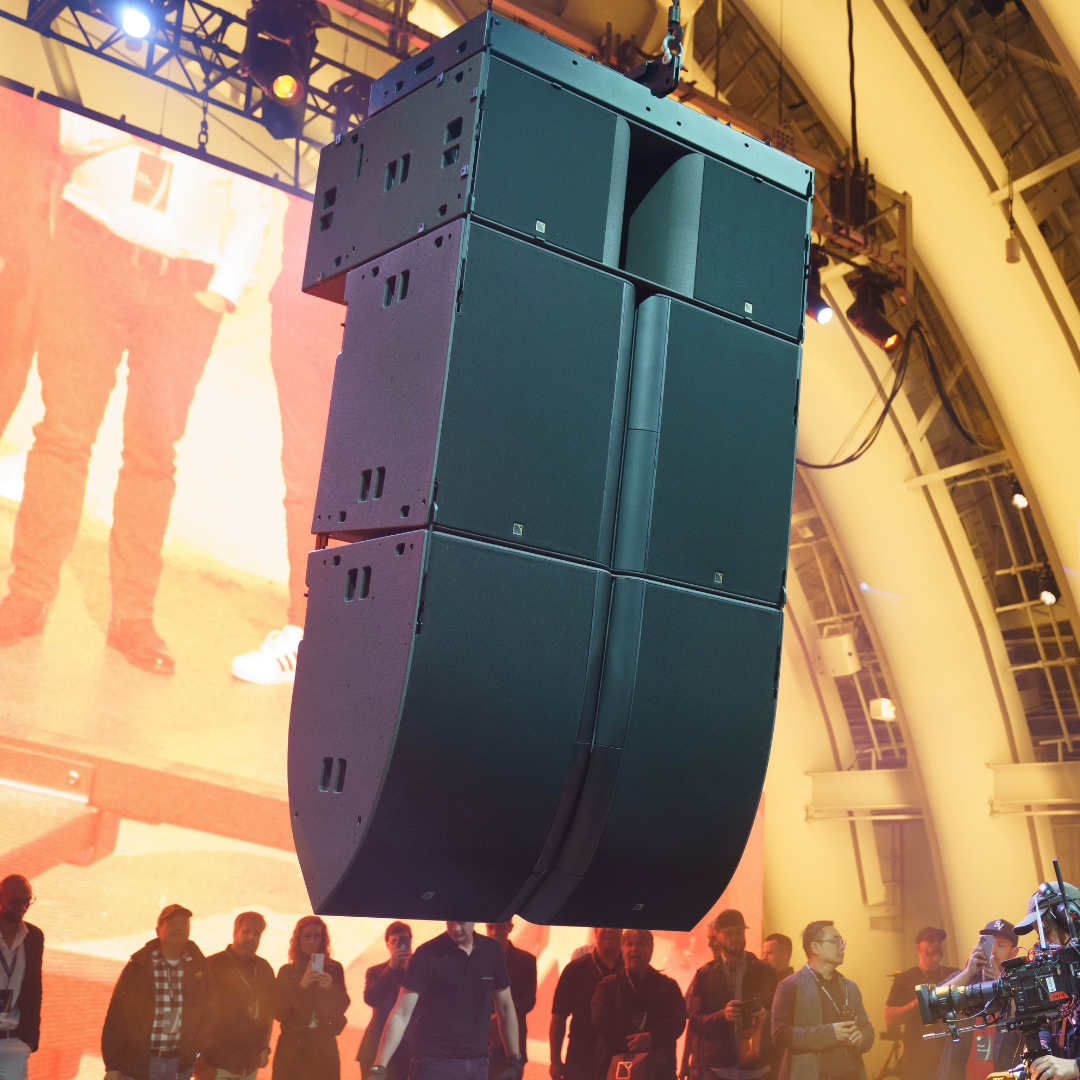
L-Acoustics L1 is the new big one. The new PA systems for those absolutely massive events. The large line format was invented by L-Acoustics. V-DOSC, then K1 in 2008. K1 was a much more incremental change than this. We’ve been waiting for years to see what is next.
The sensible choice would have been another incremental improvement. Taking todays magnet and cooling technologies which keep revolutionizing driver design and putting into a similar sized enclosure.
PULS: Progressive Ultra-Dense Line Source
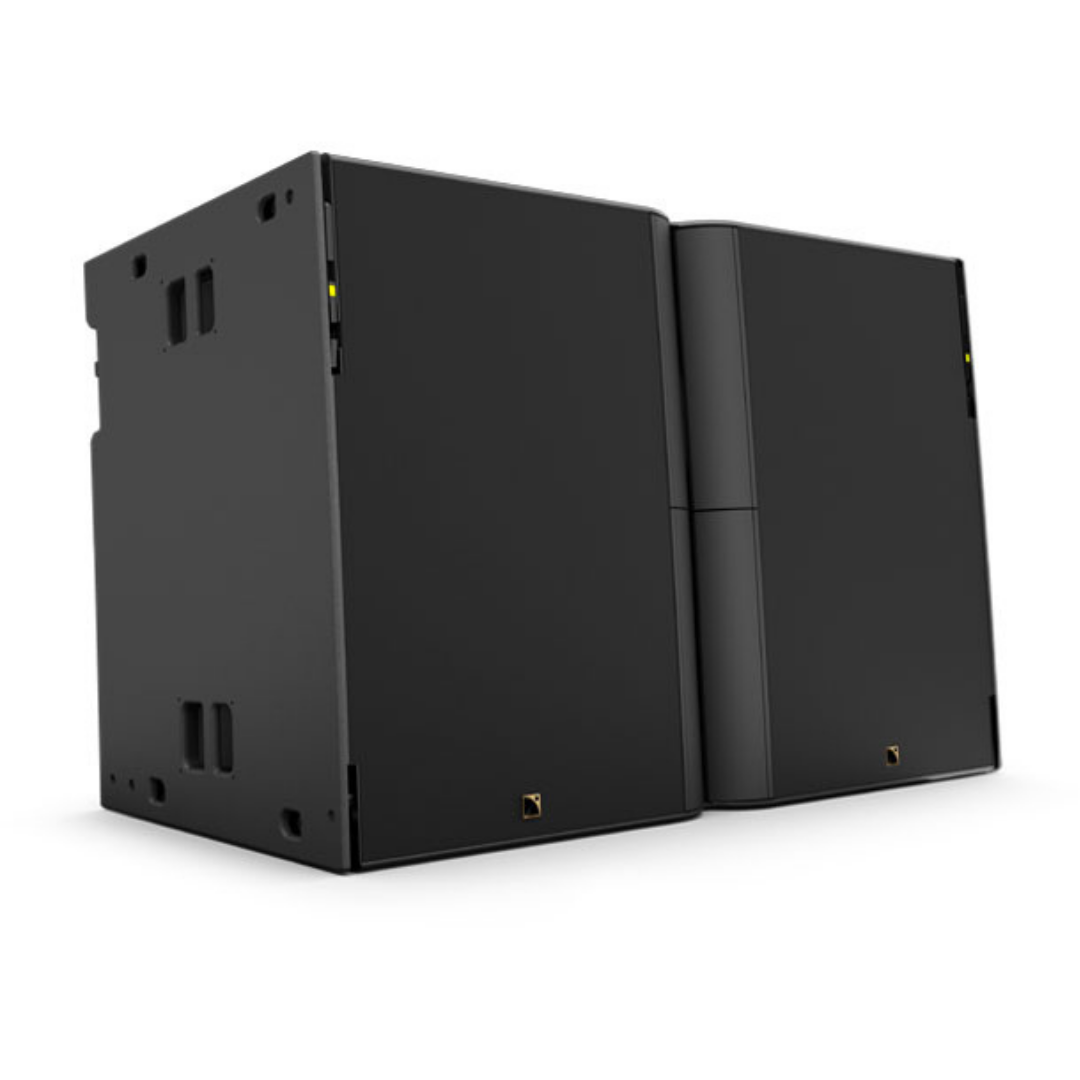
However, as we’ve seen with L2 – perhaps there was a change that needed to be made. L-Acoustics have called the tech behind the L1, “PULS” (because, why use words, when you can use an acronym). What actually means is “Progressive Ultra-dense Line Source.” And it’s mainly all about the “Ultra Dense” part.
We all want more SPL, less weight, less size, and just fitting more into a smaller gap means that – Ultra Dense. Especially if you can now cool the drivers, which was a problem in the past with other systems.
The other thing that this system fixes, is closer coupling of drivers. This might not be an issue in the HF (you don’t want a long line for dispersion reasons, as you go up in frequency), but being able to choose this control, rather than it being dictated by gaps between enclosures, unlocks a lot of possibilities.
L1 Auto-Filter and Array Optimisation
The biggest of these, is driven by what L-Acoustics are calling “Auto-Filter”. Now this has been around for a couple of years with other products, notably L2. This is still a bit “secret-sauce”, and despite asking, – L-Acoustics have never really shared what this magical button does. You press it – and it makes your simulation in Soundvision look much better. Now, although they’ve previously avoided the word, they did use the word “optimisation” in the presentation, which we’ve heard elsewhere.
The problem is that “Beam Steering” uses different technologies, and a set of maths. What we can assume is from auto-filter (and technologies of its type from other manufacturers), is that this is a transfer function of some type (I believe FIR) for the array, taking into account the vast amount of processing available in the LA7.16 platform. To understand it, it’s best to model it in Soundvision.
However, the point is – the more sources, in as denser place as possible – the more accurate this transfer function can be.
Progressive Array Design
The other reason that Auto-Filter is important to mention, is the “progressive” part of that acronym. What they are getting at here, is this isn’t just a line. As we all know, we don’t deploy line arrays as line arrays. We don’t need a source that narrow across all frequencies. In the past, we break the line, we aim other bits down, use horns to ensure that any line isn’t too long at any frequency. And attempt to aim it all at the crowd.
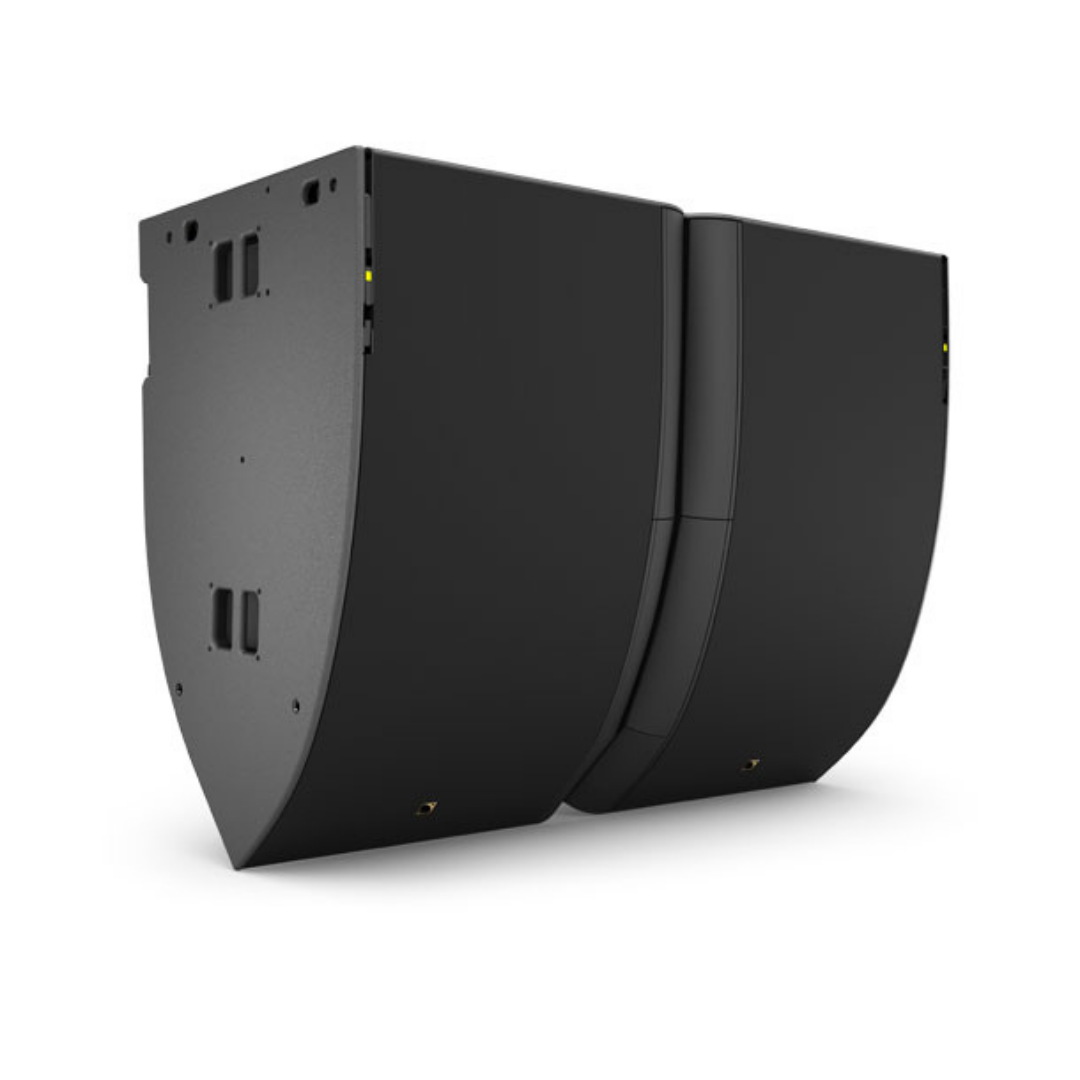
L2 is slightly different – as seen on smaller boxes for years [and the L2 for slightly larger speakers recently] – this is a natural curve. It’s always curved. Now, L1 does allow you to use 5 degree, or 0.8 degree between the boxes, so there are some choices to be made. But, in general, the curve of the PA is defined. This allows the engineers at L-Acoustics to fix a whole bunch of acoustical issues, but I suspect it makes the maths in Auto array a little easier too.
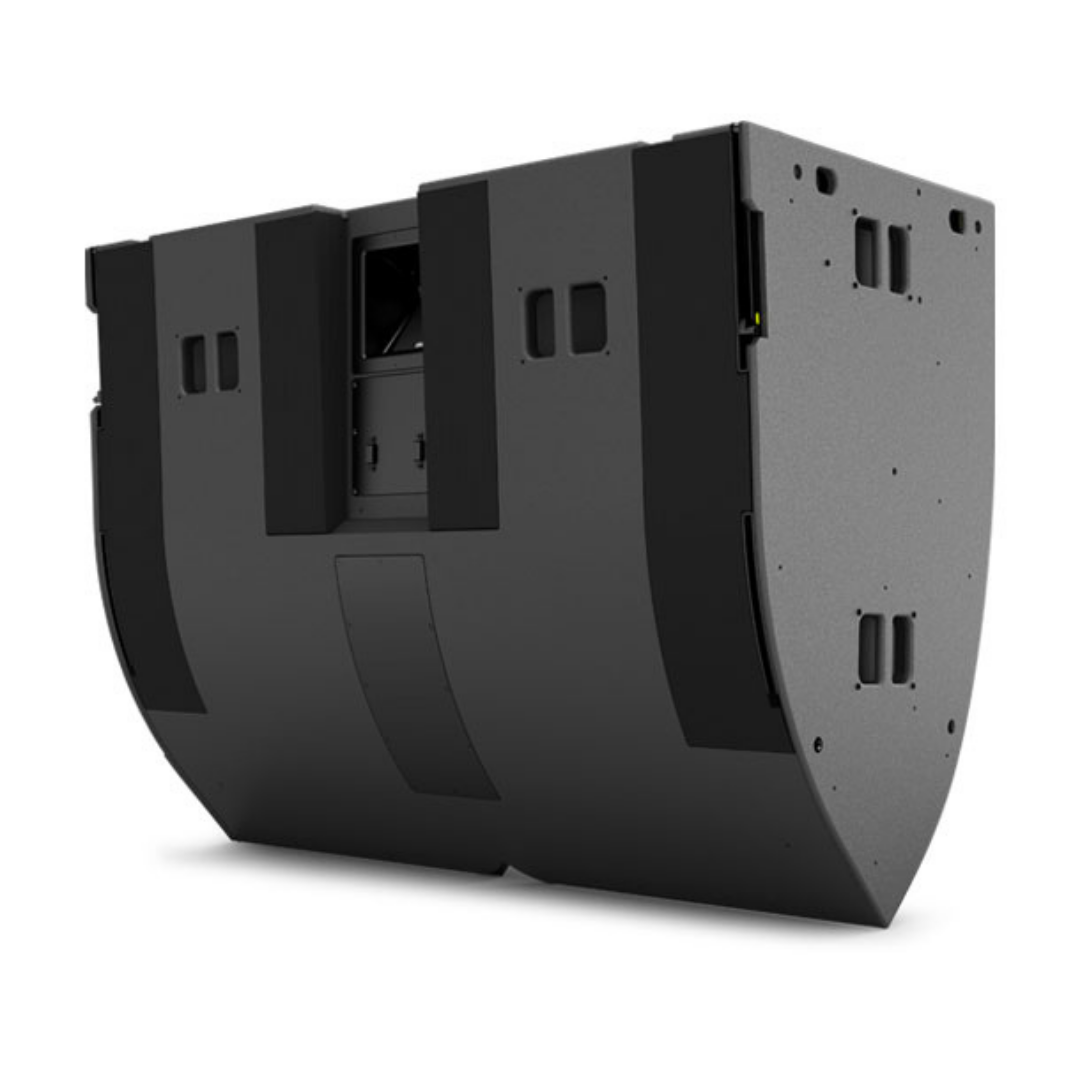
Cardioid Control and Driver Layout
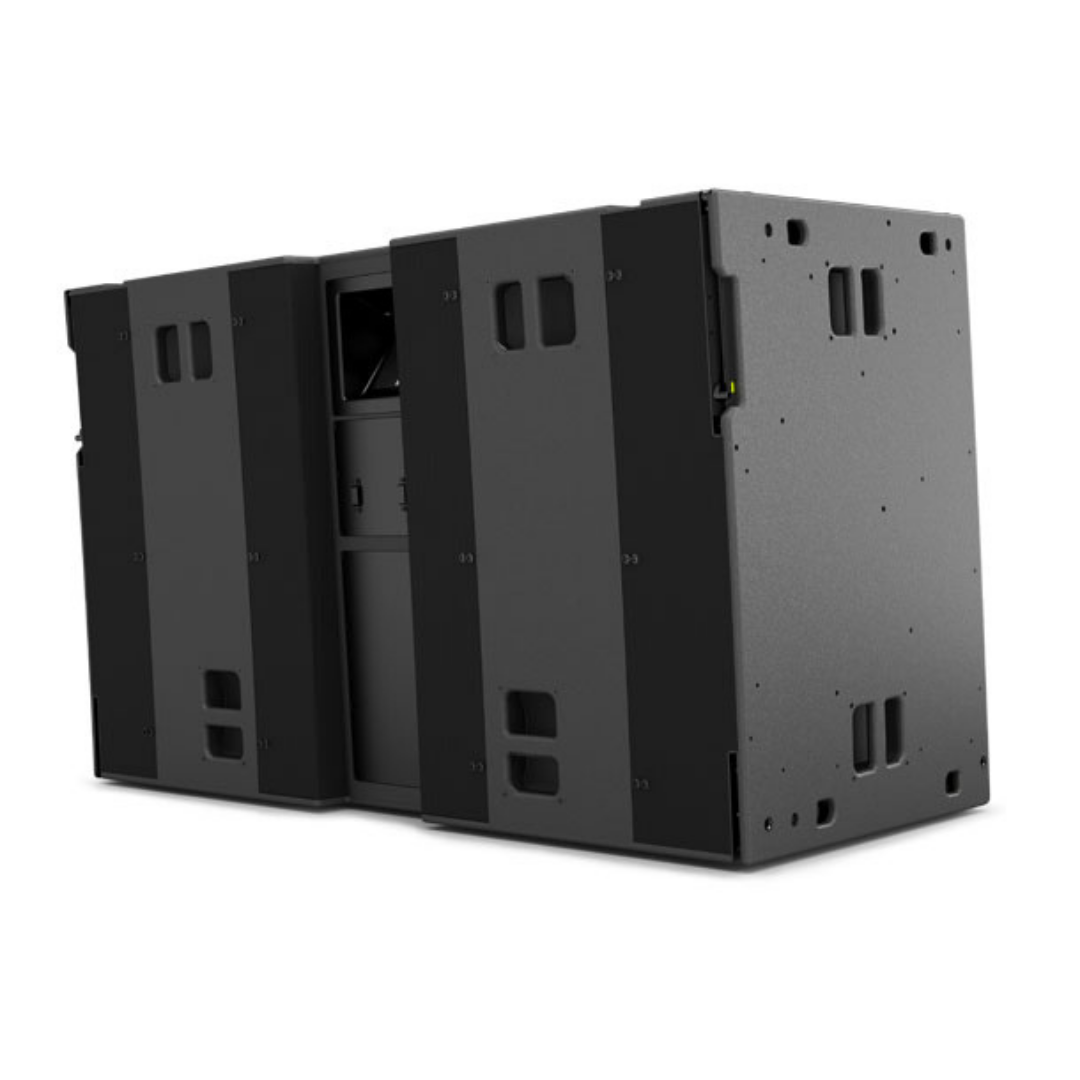
Another big acoustical feature of the speaker is that it is inherently cardioid. L-Acoustics claim more than 20dB of rejection – which is massive. This is enabled by the unique driver layout, with rear ports. This is becoming more and more important in modern staging, and L-Acoustics have taken it one step further with different presets for cardioid, hyper-cardioid, and “side rejection” depending on your aims.
The L1 also contains some very interesting drivers and driver layouts. This is a 5-way system (6 including the sub), but the big change from previous products is the use of an innovative HF. This combines a 4″ ring, and 2.5″ HF into a single unit. We’ve seen similar units from other manufacturers before, but this looks unique. There’s plenty of discussion on the forums as to what driver it might be based on – but a quick glance makes it very clear, that even if that’s the basis – there’s something special about this to L-Acoustics. As ever, moving the cross over upwards, results in a much better vocal performance.
L-Acoustics L1 Review: Who Is the L1 For?

In the rumours which pre-dated this event, a lot of noise was made about the physical size of the unit. I think this just makes clear just who this unit is for – the biggest shows. This isn’t for lifting 3 of them onto a bit of deck to use in a gig in a tight spot. This is for stadiums, festivals, and the top of the class events.
It is physically big, and I don’t think you can get away from that. But it needs to be anything else would be compromising the idea. It was actually much easier to wheel around the stage on Dollys and rig than expected. Really, if you are planning a show of this size, a forklift is not a big ask (and actually, we should stop pushing 500kg down truck ramps, but that’s a Health & Safety discussion for another day).
L-Acoustics L1 Review: How does the L1 sound?
Well, although you can never judge from a single demo, this honestly sounded fantastic. L-Acoustics bought in “War on Drugs” to play a short set, and sitting through *name a song here, I need to listen on Spotify*, everything sounded detailed in a way you don’t get on a PA of that size. Every instrument sounded just like that— an instrument—a drum or a guitar. A gentleman from the LA Philharmonic crew, described his experience to me as “just like a big Hi-Fi”, and I agree.
What else was launched at L-Acoustics Keynote?
CS1 Subwoofer:
The matching CS1 subwoofer to the product, is also physically large! A quad 21″, with cardioid performance. And extremely loud. Like a KS28 on steroids, but this system needs something serious to keep up, and this looks to fit the bill.
Perhaps we could find a nightclub for it to fit into?
Source Intelligence:
A bit of a change from Loudspeakers here, and perhaps actually more important than anything above in the long term. This is technology L-Acoustics have been working on quietly in the background, using the processing on the L-ISA processer. Using the same ideas that drive the L-Acoustics DJ technology, machine learning separating sources. This runs on the output of a channel, to minimise background noise. Not echo-cancellation. But intelligently identifying the parts of the signal you wish to keep and discarding the rest. Theres a lot to get my head around here, with how this works out output processing, how it effects the current effects-chain, but a quick demo proved interesting enough that we’d very much like to experiment!
L-Acoustics L1 Review: Closing Thoughts
L1 feels less like a conventional loudspeaker launch and more like the unveiling of a new engineering platform.
Realistically, systems of this scale are not designed for everyday deployments. This is Formula One territory. Technology developed for the absolute top end of live production where the goal is pushing:
- performance,
- control,
- efficiency,
- and acoustic consistency,
as far as possible.
But just like Formula One, the interesting part is what happens next.
Many of the technologies developed for flagship systems eventually filter down into smaller and more widely deployable products. Driver design, processing power, cardioid control, array optimisation, and intelligent system management all tend to migrate through future generations of loudspeakers over time.
And from an engineering perspective, that is perhaps the most interesting part of L1.
Because while this system is clearly aimed at stadiums, festivals, and the largest touring productions in the world, the ideas behind it will shape the next decade of professional loudspeaker design far beyond that level.
For now, though, one thing is clear: L-Acoustics are no longer thinking incrementally.

Chris Kmiec
A self confessed AV nerd, Chris is a graduate of Surrey University and has over 15 years experience with commercial AV design for venues of all types in every corner of the world.
